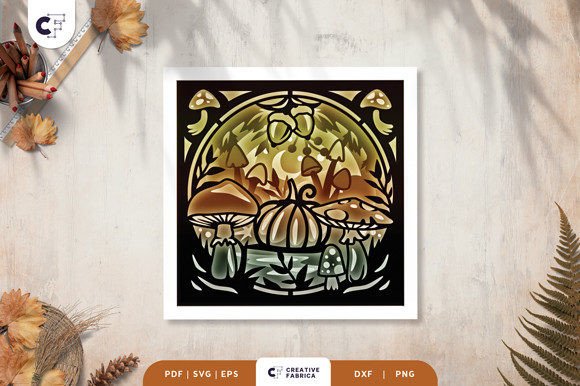
Fall Fairy Forest 3D Shadow Box: A Designer Review
As a professional designer who bridges the gap between digital assets and tangible textiles, I approach every new file with a critical eye. When evaluating the Fall Fairy Forest 3D Shadow Box, my first thought isn't just about how pretty the vector lines are on a screen. My immediate concern is translation. How does this layered, square paper cutting template survive the transition from a crisp SVG to the organic, textured reality of thread and fabric? For embroidery designers, Etsy sellers, and makers, understanding this crossover is the difference between a failed project and a best-selling handmade product.
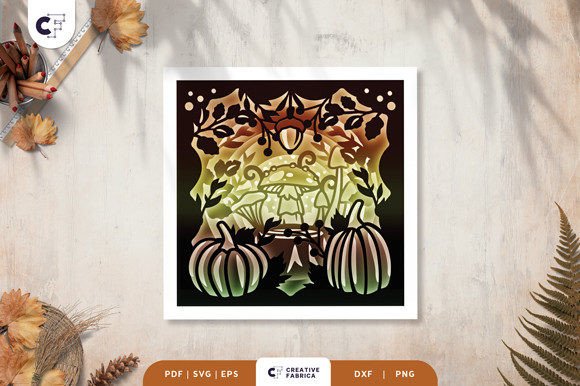
This design captures a specific autumnal whimsy that is currently dominating the personalized gift market. The mood is nostalgic yet sharp, relying on depth and silhouette rather than solid blocks of color. However, because this originates as a 3D SVG intended for paper crafting, using it as a machine embroidery design requires intentional adaptation. It is not a traditional fill-stitch landscape; it is an architectural blueprint for thread. Recognizing this distinction is vital for anyone planning to use this asset for custom apparel or boutique merchandise.
Translating Paper Layers to Thread Architecture
The visual personality of the Fall Fairy Forest 3D Shadow Box relies entirely on negative space and stacking. In paper, this creates physical depth. In embroidery, we must simulate this depth through stitch density and layering order. When I review this file for potential stitching, I look at the line weights. Are they substantial enough to support a satin stitch, or will they require a running stitch outline combined with applique?
For a recent client project involving a premium sweatshirt embroidery order, I considered this exact aesthetic. The goal was a high-end, textured look that felt like wearable art rather than a standard logo. Because the original asset is a square template, it naturally frames well on the center chest of a crewneck or the back of a denim jacket. However, I had to mentally reconfigure the "shadow box" concept. Instead of physical paper spacers, I utilized varying thread colors and strategic underlay to create the illusion of foreground fairies against a background forest. This approach maintains the integrity of the Fall theme while respecting the limitations of garment construction.
Real-World Application: From Tote Bags to Nursery Decor
Versatility is key for any digital embroidery file in a commercial inventory. The geometric, square nature of this design makes it exceptionally stable for tote bag design. Canvas and linen provide a firm base that mimics the rigidity of paper, allowing the intricate details of the fairy forest to remain crisp without distortion. For small shop products, this stability translates to customer trust. A clean, professional finish suggests quality, whereas puckering or lost details suggest amateurism.
I also see strong potential for holiday embroidery and nursery decor. Imagine this design executed as an embroidered patch for a baby blanket or framed hoop art. The whimsical forest theme fits perfectly into modern cottagecore aesthetics. However, for baby embroidery, safety and comfort are paramount. The original 3D SVG likely contains sharp points and dense layering areas that would need to be softened or reduced in stitch count to prevent the fabric from becoming stiff or scratchy against sensitive skin. Always prioritize the tactile experience over visual complexity when creating items for infants.
Critical Constraints: Where Caution is Required
While the Fall Fairy Forest 3D Shadow Box is visually stunning, it presents specific challenges that every embroidery entrepreneur must navigate. The most significant hurdle is fabric texture. Highly textured fabrics like terry cloth, fleece, or chunky knits can swallow the fine details inherent in a shadow box style. If the gaps between the "layers" are too narrow, the fabric texture will obscure the separation, flattening the 3D effect you worked so hard to achieve.
Stretchy fabrics present another risk. Because this design is square and likely features straight vertical and horizontal lines, any fabric distortion during hooping will be immediately obvious. Unlike organic, flowing floral designs where slight warping goes unnoticed, geometric frames demand perfection. If you are applying this to a stretchy t-shirt or lightweight jersey, your stabilizer choice is non-negotiable. You may need a combination of cut-away and tear-away support to maintain the structural integrity of the square border.
Furthermore, consider the washing requirements. A design derived from a paper cutting template often includes delicate, lace-like elements. On items like kitchen towels or aprons that face frequent laundering and heat, these fine details can degrade. For commercial embroidery projects intended for heavy use, I recommend testing the design’s durability or simplifying the innermost layers to ensure longevity.
Elevating Perceived Value Through Technical Precision
In the competitive landscape of Etsy sellers and creative entrepreneurs, presentation is everything. The way you utilize the Fall Fairy Forest 3D Shadow Box directly impacts buyer engagement. A flat, dense stitch-out looks cheap. A dimensional, well-executed stitch-out looks expensive. To achieve the latter, focus on contrast. Test your thread colors against both light and dark fabric backgrounds. The interplay of shadow and highlight is what sells the "3D" aspect in a two-dimensional medium.
Professionalism also extends to your digital listings. Use printable mockup templates to show customers how the finished product will look before you even thread the needle. However, ensure your mockups accurately represent the stitched texture, not just the vector graphic. Misleading previews lead to returns. When listing this as a finished product, highlight the technical adaptations you made—such as "optimized for softness" or "reinforced for washability." These details signal to buyers that you understand your craft and value their investment.
Essential Pre-Stitch Checklist for Makers
Before you commit this design to a final product or list it in your shop, run through this practical validation process:
- Verify Licensing: Confirm whether your purchase of the Fall Fairy Forest 3D Shadow Box includes commercial rights for finished embroidered goods versus digital resale. Never assume usage terms.
- Test Stitch Density: Run a sample on scrap fabric identical to your final product. Check if the layered areas become too thick or bulletproof. Adjust density settings in your digitizing software if necessary.
- Hoop Size Confirmation: Ensure the square dimensions fit comfortably within your hoop with adequate margin for stabilization. Crowding the hoop edges leads to registration errors.
- Detail Inspection: Zoom in on the smallest elements. If a detail is smaller than 2mm, it may not stitch cleanly. Consider removing or enlarging micro-details that serve no structural purpose.
- Stabilizer Match: Pair the stabilizer weight to the fabric and design density. A complex shadow box on lightweight cotton requires different support than the same design on canvas.
- Mockup Validation: Create black and white test stitch-outs to evaluate contrast independent of color. If the design reads poorly in grayscale, it lacks sufficient definition.
The Fall Fairy Forest 3D Shadow Box offers a beautiful foundation for autumn collections, but its success lies in your execution. By treating this SVG not just as a picture, but as a structural guide for textile art, you transform a digital download into a cherished handmade product. Whether you are crafting a personalized gift or scaling a craft business, let technical mindfulness drive your creativity. The result will be work that stands out for its quality, durability, and unmistakable professional touch.