Love Grows Here 3D Shadow Box: An Embroidery Review
As a designer who constantly bridges the gap between digital assets and tangible textiles, I approach every new file with a healthy dose of skepticism. When I first opened the Love Grows Here 3D Shadow Box, my immediate thought was about translation. This asset is originally marketed as a layered paper-cutting template and a 3D SVG for Paper Flowers, but for those of us in the embroidery industry, the real question is always the same: Will this stitch out beautifully, or will it become a thread-eating nightmare? After evaluating the geometry, line weight, and thematic resonance of this design, I see immense potential for specific handmade products, provided we respect the structural differences between cutting paper and piercing fabric.
Translating Paper-Cut Aesthetics to Stitch
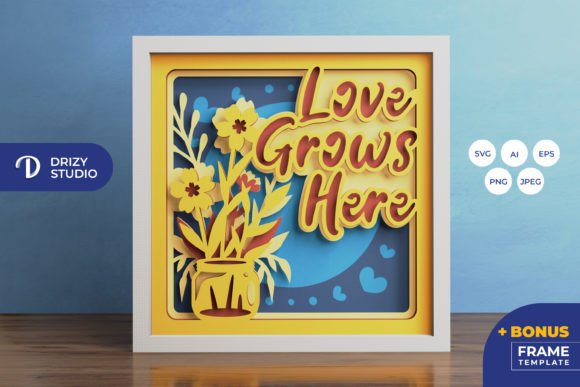
The visual personality of the Love Grows Here 3D Shadow Box is undeniably warm. It carries that quintessential cottage-core mood that performs exceptionally well on platforms like Etsy and at local craft fairs. The layout suggests depth through layering, which is brilliant for paper but requires strategic adaptation for a machine embroidery design. In paper crafting, shadows are physical; in embroidery, we must create that illusion through stitch density and thread color contrast.
When reviewing this as an embroidery file or a base for digitizing, I look for clean lines that can support a satin stitch or a refined running stitch without puckering. The "shadow box" concept implies borders and frames. For textile application, these framing elements need to be stable enough to anchor the design but delicate enough to maintain the airy, garden-inspired aesthetic. If you are using this as a guide for custom digitizing, avoid heavy fill stitches in the background layers. Instead, utilize tone-on-tone thread colors to mimic the paper layers without adding excessive bulk that could distort lightweight fabrics.
Real-World Application: The Custom Tote Bag Test
To truly evaluate this design, I mentally placed it onto a natural canvas tote bag intended for a boutique gardening shop. This is where the Love Grows Here 3D Shadow Box shines brightest. Totes offer a stable, woven fabric texture that handles detailed embroidery projects better than stretchy knits. For this specific scenario, I envision the design centered on the front panel, serving as both branding and art.
In this real-life case, the customer isn't just buying a bag; they are buying into the "love grows" sentiment. The design needs to withstand the wear and tear of being carried to plant nurseries and farmers markets. Here, the 3D SVG origin actually helps us. Because the original file relies on distinct layers, we can separate the text from the floral motifs. This allows for better registration when hooping. I would recommend testing this as an applique design for the larger floral elements to reduce stitch count and keep the tote bag lightweight, while using precise satin stitches for the typography to ensure legibility from a distance. The result is a professional, high-value handmade product that feels intentional rather than generic.
Navigating Fabric Limitations and Hoop Sizes
While the design is versatile, it demands respect for fabric physics. The intricate nature of a shadow box style means there are multiple intersection points where threads overlap. On thin fabric like quilting cotton or linen tea towels, this density can cause tunneling if the stabilizer choice is incorrect. I always advise fellow makers to use a medium-weight cutaway stabilizer for items that will be washed frequently, such as baby embroidery projects or kitchen textiles. Tear-away stabilizers often leave residue in complex designs like this, compromising the crispness of the final look.
Hoop size is another critical factor. The Love Grows Here 3D Shadow Box likely has a square aspect ratio given its name. Before committing to a sweatshirt embroidery project or a nursery pillow, confirm your hoop dimensions. Square designs can sometimes exceed the vertical limit of standard rectangular hoops even if the diagonal measurement fits. Always check the actual stitch area dimensions in your software. Furthermore, be cautious with curved surfaces. While this design would look lovely on a cap, the flat, layered perspective of a shadow box can appear distorted on the curved brim of a hat. It is generally safer to reserve this specific aesthetic for flat garments like aprons, blanket corners, or framed wall hangings.
Commercial Viability for Makers and Sellers
For Etsy sellers and small business owners, time is money. The Love Grows Here 3D Shadow Box offers strong commercial potential because it targets an evergreen niche: home and garden enthusiasts. However, product value relies heavily on execution. A sloppy stitch-out devalues the brand instantly. When creating listings, use printable mockups that accurately reflect the scale of the embroidery. Customers need to understand that this is a textured, stitched item, not a printed graphic.
If you are selling finished products, consider how this design pairs with other inventory. It works beautifully as part of a cohesive collection—perhaps matching embroidered patches for denim jackets or coordinating tea towels. Consistency builds buyer trust. Additionally, verify your licensing. Just because a file is sold as a 3D SVG or paper template does not automatically grant commercial embroidery rights. Always confirm whether the digital embroidery file includes permission for selling physical goods before listing anything in your shop.
Essential Designer Notes for Success
Before you thread your needle or finalize your digitizing, run through this practical checklist to ensure the Love Grows Here 3D Shadow Box translates perfectly to fabric:
- Test on Scrap Fabric First: Never stitch a complex layered design directly onto a finished product. Use a scrap of the exact material and stabilizer combination you plan to use to check for registration issues.
- Evaluate Thread Color Contrast: Since this mimics a 3D shadow effect, low-contrast thread colors might make the layers disappear. Test in black and white mode on your screen to ensure the values read clearly without relying solely on hue.
- Check Small Details: Inspect tiny lettering or thin vine work. If lines are thinner than 1mm, they may need to be converted to running stitches or removed entirely to prevent needle breaks and fabric damage.
- Verify Stabilizer Compatibility: Match the stabilizer to the end-use. Baby clothes require soft, washable backing, while decorative pillows can handle heavier support for crisper definition.
- Review Stitch Density: Ensure the design isn't too dense for the chosen fabric. High-density areas on lightweight knits will cause sagging. Adjust pull compensation settings if necessary.
- Confirm Licensing Terms: Double-check whether the source allows for commercial embroidery use, especially if adapting a paper-craft file into a stitch format.
Final Thoughts on Design Integrity
The Love Grows Here 3D Shadow Box is more than just a pretty quote; it is a structural challenge that rewards careful planning. Its transition from a Paper Flowers template to a textile masterpiece requires a maker who understands the interplay of tension, texture, and theme. By treating this design with the technical rigor it deserves, you elevate it from a simple digital download to a cherished personalized gift or best-selling boutique item. Whether you are stitching a holiday gift for a gardener or expanding your commercial embroidery catalog, let practical judgment guide your creativity. The most successful embroidery projects are those where the art serves the fabric, not the other way around.